
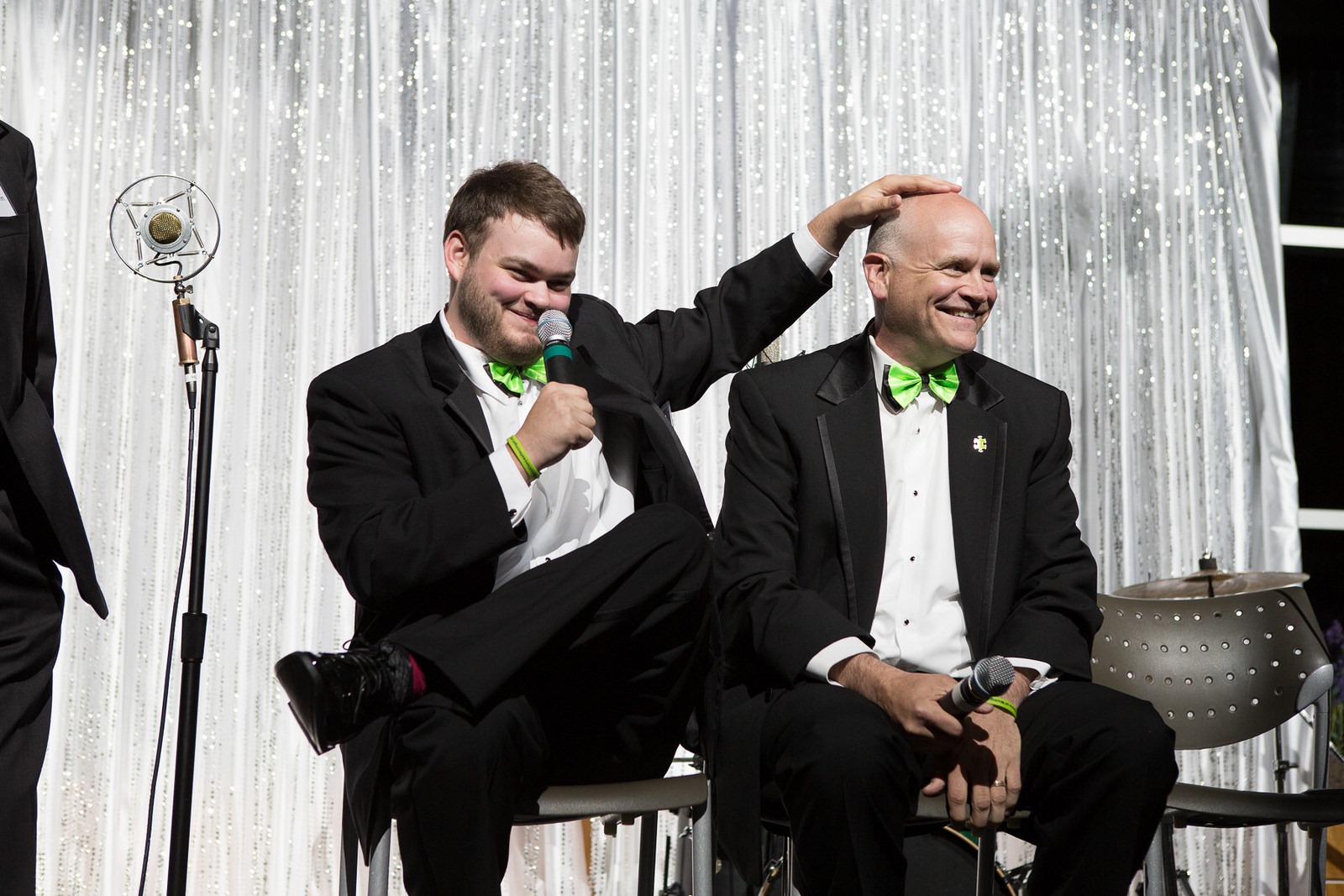
Please help me find a job for my son. While you’re at it, help me find jobs for the thousands of other
Michiganians with autism whose talents are being wasted over discrimination, lack of preparation and other barriers to the workforce.
Tyler, 28, graduates this month from Saginaw Valley State University with a history degree after a decade of grinding his way through education and social challenges that most of us can’t fathom. He is my hero. Words can’t describe how proud I am of my son with a strong work ethic, photographic memory, a wry sense of humor, a compassionate soul and a deeply seated sense of integrity that comes with autism’s literal-mindedness. The kid can’t lie.
While these and other attributes make people on the spectrum extraordinary employees, their career paths are crowded with obstacles familiar to any Michiganian with a so-called disability.
- Employers are reluctant to hire them because of myths and exaggerations about the accommodations needed to support their work.
- Transportation is difficult for many of them.
- Some worry that their disability benefits would be jeopardized by full employment, though that threat is overstated.
- Some are not prepared for the job market because of a lack of attention and funding given to K-12 special education.
- Many never find a job that matches their skills and interests.
“It’s a significant problem and has been for a long time, even with increased awareness and efforts to include people with autism and other neurodiversities in the workforce,” said Colleen Allen, president and CEO of the Autism Alliance of Michigan. “Our employers are still reluctant to hire people with extraordinary talent out of a population that we know over-performs and over-produces. When the doors are opened for people on the spectrum, it ends up being a really good experience for employers and employees.”
This is not a matter of charity. Workforces with neurodiversity hiring programs benefit greatly. For instance, JPMorgan Chase reported that autistic professionals in their program were 90% to 140% more productive than their neurotypical colleagues in certain technology and operational roles. Microsoft found that teams with autistic members identified significantly more bugs in software testing scenarios. Consumers aren’t the problem: 92% say they feel more favorable toward businesses that employ people with disabilities, and 66% want to buy products and services from them.
People on the spectrum tend to exhibit exceptional attention to detail, a strong ability to focus on tasks, a logical and systematic approach to problem-solving, lower turnover rates, and higher-than-usual levels of integrity, reliability, and dedication.
And yet the Autism Alliance of Michigan estimates the unemployment rate for people with autism is in the 75-90% range. That’s a tragedy not only for those people, consigned to a life of loneliness and lack of purpose, but also to their state. Think of the talent and potential taxpayers going to waste in Michigan.
As a member of the Autism Alliance’s board, I helped establish a goal in 2020 to reduce the unemployment rate for autism to the state’s overall rate within 10 years. Despite our full-court press, we are nowhere near that goal.
“It’s great when we’re in a room and employers are saying all the right things,” Allen said. “But there’s little follow through.”
Good intentions, she said, aren’t good enough. My son and people like him are part of a hidden workforce in Michigan — 1.7 million adults with disabilities who are not employed. Nearly one million Michiganians with disabilities live below the poverty line, not because they’re incapable of providing for themselves. But because they can’t find a job.
Tyler should be okay. He has earned a college degree. He has successfully held several summer jobs. He can drive. And his father is relatively well-connected. But he is entering a job market that has historically been unforgiving to entry-level employees, due to a sluggish economy and the rise of artificial intelligence.
His brilliantly unique mind should be an asset, not a liability. The same goes for every other Michiganian on the spectrum.
Ron Fournier is a consultant with Truscott Rossman and author of “Love That Boy: What 8 Road Trips, Two Presidents, and My Son Taught Me About a Parent’s Expectations.”